The Boy Who Almost Wasn’t.
“In my distress I called to the Lord, and He answered me.”
— Psalm 120:1
There are numbers etched into my soul that most people will never understand.
One hundred injections. A decade of waiting. Four months in an antepartum ward, carrying two boys in a body that was doing everything it could to hold on. And then — three sons. Three boys prayed into existence one desperate, faithful needle at a time.
But this post is about one of them in particular. The second-born twin. The one who came into the world too early, too small, and, if the timing had been even slightly different, would not have made it at all.
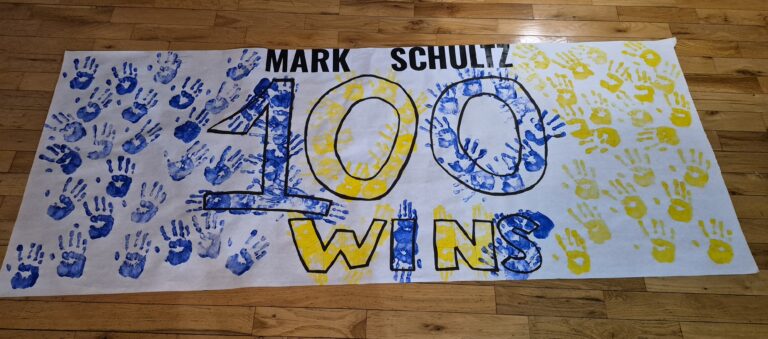
Today, that boy has one hundred wins on a wrestling mat.
And I am completely undone by the faithfulness of God.
The Long, Hard Road to Three
For ten years, my husband and I lived in the particular grief that infertility carves into you — quiet and relentless. It hides in baby shower invitations and innocent questions at family dinners. You grieve futures that never arrived.
We turned to IVF. Cycle after cycle. My body became a schedule of vials and needles and ice packs and sharps containers. I lost track of many things during those years, but I never lost count of the injections.
Over one hundred of them.
Some nights I sat on the edge of the bathroom counter, needle in hand, and cried before I even began. Not from the physical pain alone, but from the weight of summoning hope again when the last hope had not come through. My husband would sit beside me. Neither of us needed many words. That kind of love doesn’t require them.
Through all of it, I clung to Psalm 120:1: “In my distress I called to the Lord, and He answered me.” I didn’t always feel Him close. But I kept calling. Because desperation and faith, it turns out, can occupy the same heart at the same time.
Three Sons — Two at Once
God answered our prayers not once, not twice, but three times over — and in His characteristically surprising way, He gave us two of them at once.
Our oldest son came first — our initial, overwhelming answer to a decade of prayer. Holding him, I thought this was what we were fighting toward. Every injection, every waiting room, every grief-soaked night. It was all pointing here.
Then came the news that we were carrying twins.
Gratitude and quiet terror walked hand in hand to every appointment after that. We called them Baby A and Baby B. And we had no idea just how much those designations would come to mean.
Four Months in the Antepartum Ward
Right before viability day, the earliest the boys could survive outside the womb, Baby A’s sac ruptured.
I was admitted to the antepartum ward that day. And I did not leave for four months.
Most people have never heard of an antepartum ward. It is where high-risk mothers go when their pregnancies have become too precarious to manage at home — when keeping a baby alive requires the round-the-clock monitoring only a hospital can provide. Of waiting that is not passive but active, urgent, and deeply intentional.
I lay in that bed and became the only barrier standing between my sons and a world they were not yet ready to enter. My stillness was their safety. My body, compromised as it was, was their home. Every morning I woke up in that antepartum room, they were still there — still growing, still being knit together in the hidden place.
Our oldest son was at home. My husband moved between two worlds, the hospital and the house, holding everything together with the kind of quiet strength that only reveals itself under sustained pressure. The antepartum nurses became my village, the people who checked on me not just clinically but humanly. I am still grateful for them.
And through every slow day and every anxious night, I kept choosing hope. Because I had already spent ten years learning that God could be trusted in the waiting — and I was not about to stop believing that now, in a hospital bed, carrying the very answers to those ten years of prayer.
I wasn’t watching them fight from the outside. I was the fight. My body, my stillness, my daily surrender were what kept them going.
The medical team’s goal was simple to state and enormous to achieve: keep Baby A’s ruptured sac stable, protect Baby B, and buy them both as many days as possible. We counted them like treasure.
For four months, Baby A held on. And as long as he held on, Baby B was safe. The boys were already fighting together — already brothers — before the world even knew their names.
The Delivery That Changed Everything
When the moment finally came, it came with urgency. This was not on a timetable we chose but on one God had ordained. After four months of holding on, Baby A’s condition made waiting any longer impossible.
And because Baby A came when he did — because those four months of fragile, faithful endurance finally gave way to delivery — Baby B came with him.
Had Baby A’s sac not ruptured and had he not held on in utero for four months, Baby B would not have survived.
The crisis that began this story — the rupture, the antepartum admission, the four months of stillness and prayer — was not a detour from God’s plan. It was the plan. Every day those boys stayed together was a day Baby B moved closer to survival. Every prayer from that antepartum bed was being answered in real time, even when the answer looked like fluorescent lights and hospital meals and another morning of choosing to trust.
Baby A, still in utero alongside his brother for those long months, was already his keeper. Holding on not just for himself but for Baby B too.
As it turned out, it would not be the last time.
The Baby Who Almost Wasn’t
When the boys were born, everything shifted at once. For four months I had been their world: their warmth, their shelter, the body that held them close. And then, in the span of a delivery, they were on the outside. Separate. In the hands of a NICU team doing what antepartum prayers had been working toward all along.
Baby B was small. The transition from carrying him inside me to watching him fight from the outside was one of the most profound and disorienting moments of my life. After months of being his everything, I sat beside his neonatal incubator and felt the fierce helplessness of loving someone you could not protect with your body anymore.
I looked at him and prayed the only prayer I had left: “You gave him to me. Please do not take him now.”
Those weeks in the NICU were their own kind of waiting, different from the antepartum ward, but no less sacred.
And the Lord, who had heard every prayer through every injection, who had sustained two boys in utero, who had orchestrated every detail of that delivery, heard that one too.
Babies A and B came home.
But that is not where the story ends.